Insights
What does a manufacturing company website cost in 2026?
What good looks likeBy Whitelam Media7 min read
All insightsWhat moves the price of a manufacturing website, from spec sheets and CAD downloads to RFQ uploads, rep locators and multiple plants. Where each item fits in our fixed-price packages, and what to ask an agency before you sign.
A manufacturing website costs what its product pages, files, forms and links to other systems take to build. Page count matters less than most owners expect. What moves the price is how many kinds of page you need, how many files buyers download and whether the site has to talk to your ERP or your distributors.
This guide is for mid-size US manufacturers and distributors deciding what to spend.
The website now does more of the selling before anyone calls you. In a Gartner survey published in June 2025, 61% of B2B buyers said they prefer an overall rep-free buying experience. For a manufacturer, that means an engineer reading your capability pages is often your first sales meeting.
What moves the cost of a manufacturing website.
- Product and capability pages. Each type of product needs a page template with fields for specs, materials, tolerances and certifications. Once those templates exist, your team can add products without a developer. More product families mean more templates.
- Spec sheets and CAD downloads. Files need a library, clear names and one person who owns the latest revision. You also decide whether CAD files are free to download or sit behind a short form so sales can follow up.
- RFQ forms with file upload. Buyers want to attach a drawing. That means secure file storage, size limits, spam filtering and routing so the right estimator gets the request. WeCreate's guide to manufacturing sites suggests keeping these forms to five fields, with a drawing upload among them.
- Distributor or rep locators. A searchable map by state or territory is simple to build. Keeping the rep list current is harder, so it should live in the CMS your team edits.
- Multiple plants. Each plant needs its own page with its address, capabilities, certifications and contact. This is a structure decision made at the start, and it is cheaper to plan than to add later.
- Links to other systems. ERP data, dealer pricing or a customer login is where cost jumps, because each one needs access, testing and someone on your side who knows the system.
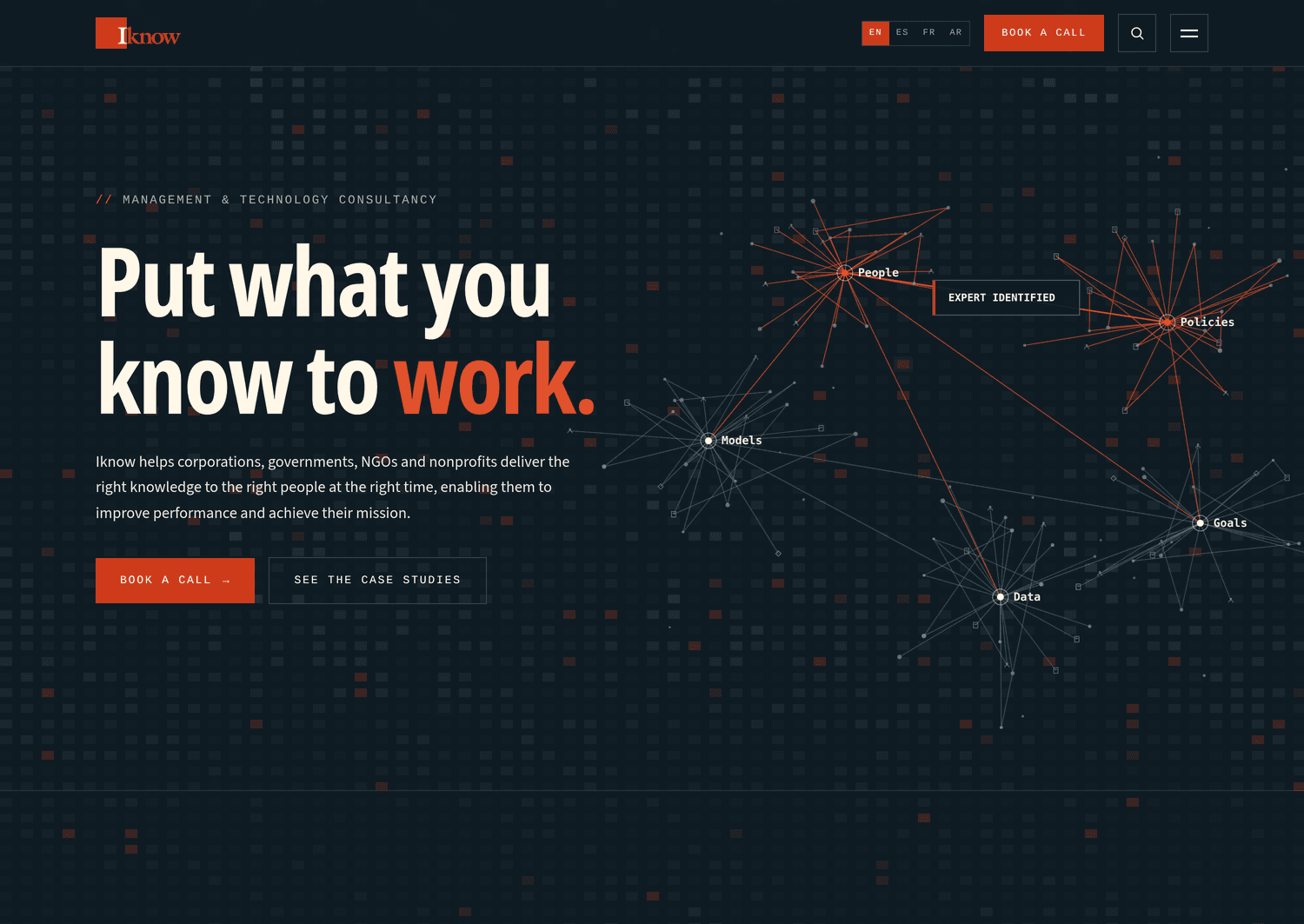
- More than one language. If you export, every translated page adds work. Our rebuild of iknow.us for Iknow LLC, launched in September 2026, runs in English, Spanish, French and Arabic with full right-to-left layout.
For the full list of what a manufacturing site should include, see our manufacturing website checklist.
What we charge and where your site fits.
Our prices are fixed and published on our pricing page, so you can check them before a call. There are three website packages, and each includes hosting and support billed monthly.
- Foundation Level. A bespoke responsive site, a CMS your team edits, an SEO-ready structure, contact and lead forms and a project or case study system. Delivered in two to three weeks. This suits a single-plant shop with a short product list.
- Growth Platform. Everything in Foundation, plus a multi-location and multi-service structure and richer project and portfolio sections. Delivered in three to four weeks. This is where most mid-size manufacturers with several plants or product lines land.
- Authority System. Custom builds for bigger sites and firms that need portals, dashboards or ecommerce. We quote these once the scope is written down.
Other agencies publish wider ranges. Nopio's 2026 guide puts manufacturing websites at $10,000 for basic brochure sites up to $100,000 and more for enterprise builds with custom integrations. Trajectory Web Design's 2026 guide puts the spread at $5,000 to $80,000 and more, with $40,000 to $80,000 when the site connects to an ERP or serves distributors behind a login. The gap between those numbers comes from scope. The table below shows which scope item lands where with us, and who does what.
| Cost driver | What you supply | What we build | Usual package |
|---|---|---|---|
| Product and capability pages | Product list, specs, photos and approved copy | Page templates with spec fields your team fills in | Foundation Level for a short list, Growth Platform for several product lines |
| Spec sheets and CAD files | Current files and a named owner for revisions | File library, download links and an optional short form | Foundation Level or Growth Platform, by volume |
| RFQ form with drawing upload | Who gets each request and which file types you accept | Form, secure file storage, routing and spam filtering | Foundation Level |
| Distributor or rep locator | A territory list you keep current | Searchable locator managed in the CMS | Growth Platform |
| Multiple plants | Address, capabilities and certifications for each plant | Location pages on a multi-location structure | Growth Platform |
| ERP, dealer pricing or customer login | System access and a person who knows the system | Integration, login and permissions | Authority System, quoted on scope |
| More than one language | Translations or someone to approve them | Language versions, right-to-left layout if needed | Quoted on scope |
The scope call confirms the package. The scope is locked before work starts, so the price is too.
Rebuild or refresh your old WordPress site?
A refresh means new design on the same site. It can work when the plugins are current, the hosting is solid and your team can already add a product in a few minutes.
A rebuild makes sense when plugins are out of date, product updates need a developer, pages load slowly or the site sits on cheap shared hosting. We rebuild legacy sites on Next.js and Payload CMS, hosted on Vercel with content in Neon. Your team edits in the browser and you own the code and content. If you want that setup, or already run it, see our Next.js and Payload CMS service.
Not sure which you need? Our free Website Health Check shows how outdated and exposed your current site is. A rebuild should keep your old URLs working with redirects, so the pages Google already knows still lead somewhere.
What to ask an agency before you sign.
Get the answers to these in writing from every agency on your list.
- Is the price fixed, and what sits outside it? Ask for the list of page templates the quote covers.
- Who loads the products and files? Moving every spec sheet is real work, so find out if it is in the price.
- Where do RFQ uploads go? Ask who gets alerted and how long files are kept.
- Can my team add a product, a spec sheet or a rep without calling you? Ask for a live demo of the editor.
- What happens to our old URLs? Ask for a redirect plan before launch.
- Who owns the code, content and domain? You should be able to leave with all three.
- What does hosting and support cost each month, and what does it cover? Updates, backups, monitoring and small changes should be listed.
- How will buyers find the site? Be careful with anyone who promises rankings. Nobody can, because nobody controls Google. A fair answer describes the work, the timeline and what gets reported. Our SEO Growth Program runs 6 to 12 months and is aimed at inquiries from Google and AI search.
- Can AI tools read the site? Buyers now ask AI tools like ChatGPT or Claude for suppliers too. Our free Search Check shows whether Claude names you and who it names instead.
Where to start.
Write down your product families, plants, file types and any systems the site must connect to. That list sets the price more than anything else. To see what strong sites in your field do with those parts, look at our list of the best manufacturing websites in 2026.
When you are ready, see how we approach manufacturing website design, check our pricing or book a call to talk through your scope.