Foundation Level
Professional digital presence, built right.
Best forSmaller construction, engineering and technical firms that need a serious professional presence.
From$7,500
+ $99 / month Foundation Support
Delivered in 2-3 weeks.
Your buyer is a construction manager, EPC contractor or wind-farm operator with a lift to plan. They need to know your fleet, your reach, your safety record and your engineering depth before they pick up the phone.
We work with crane, rigging and heavy-lift contractors across the US and UK, with most builds landing between $7,500 and $25,000 depending on how much system sits behind the site.
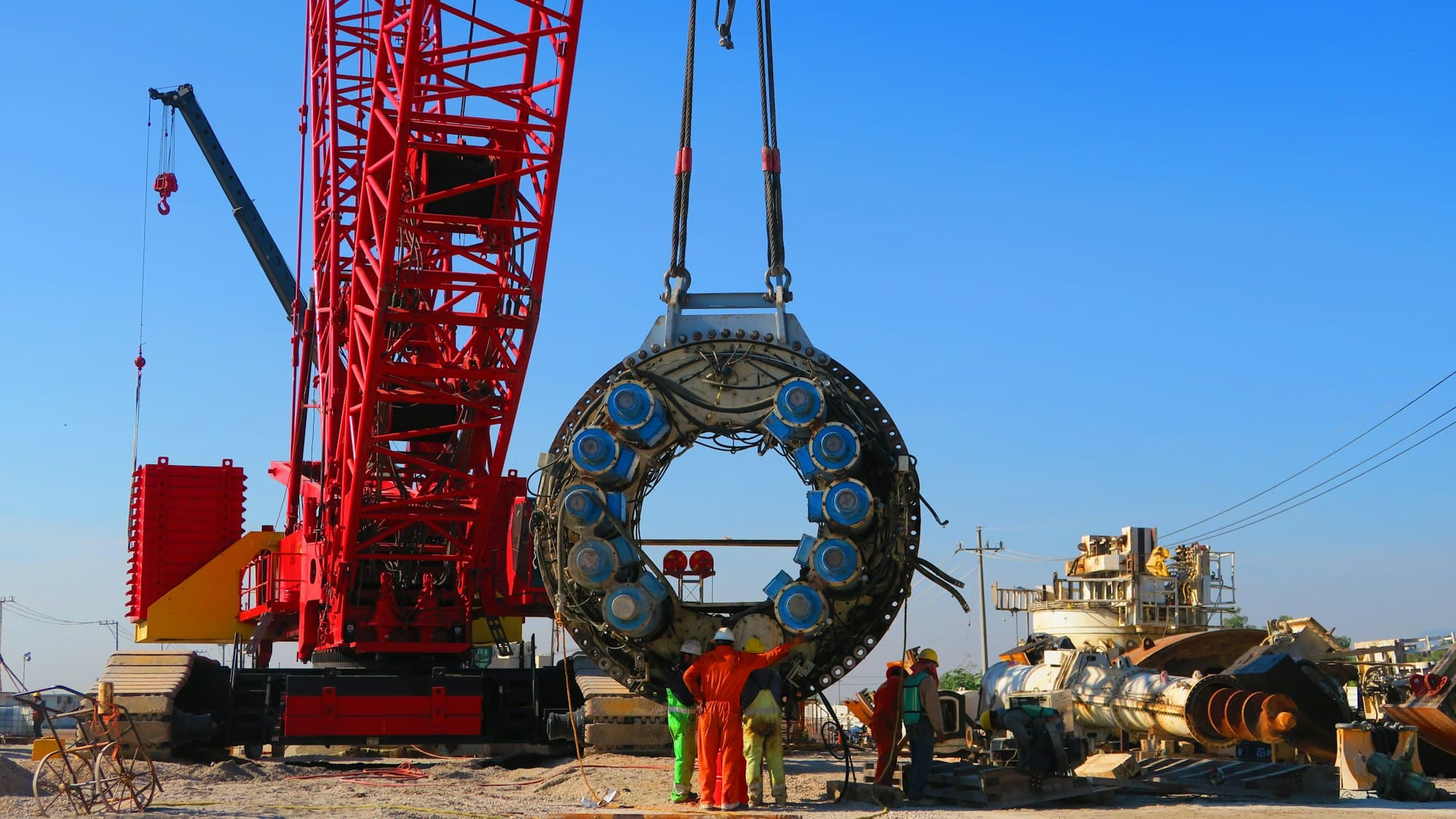
Crane and rigging is a high-stakes, specialised industry. The buyer is technical, safety-conscious and timeline-pressed. The websites in this space are still mostly thin brochure sites with a fleet list and a phone number. Five patterns we see almost every time.
"500-ton crawler crane." Buyers need boom length, jib config, lift capacity at radius, maximum reach. None of it on the site.
TRIR, EMR, OSHA citations, safety certifications. The buyer's risk team needs this before they consider you. The site doesn't surface it.
Heavy-lift planning involves engineering. Lift plans, FEA, ground-bearing studies. The site rarely shows the firm has this capability.
Where do you operate? Where can you self-mobilise? Where do you sub-contract? Procurement teams need to know in the first 30 seconds.
NCCCO certifications, hours of experience, retention rate. The people doing the work are the differentiator. The site doesn't say who they are.
Fleet with full specs. Safety performance surfaced. Engineering depth proven. Geographic reach clear. Operator credentials visible.
Turnkey
Design, build, hosting, security, monitoring and the changes that come after launch are handled as one engagement, so nobody on your team has to become the website person.
Most agencies scope discovery as a Phase 0 paragraph and treat production as the work. We invert that. Discovery is real work with the operator. Production is built on what it finds. Launch isn't the end of the engagement.
Working session with the operator (not just marketing). Audit of the existing site, competitors and search behaviour. The brief comes out of this work, not into it.
Positioning. Architecture. Copy for the homepage and the project case study template. Photography brief. Sector pages mapped to buyer search intent.
Visual system, page designs, brand application. Designed in code rather than Figma so the team sees the real artefact, not a flat mockup.
Modern production build using the latest web standards. CMS configured. Project case studies migrated and rewritten where needed. Analytics, structured data and Search Console wired.
Go live. Daily review of real user behaviour for the first 30 days. Two or three rounds of changes against what the data shows. Most agencies stop at launch. We don't.
Foundation Level and Growth Platform are fixed-price website packages. Authority System is for custom project builds: maxed-out websites, ecommerce, dashboards, portals, automation and bespoke operational systems. Every tier ships with bundled monthly support.
Professional digital presence, built right.
Best forSmaller construction, engineering and technical firms that need a serious professional presence.
+ $99 / month Foundation Support
Delivered in 2-3 weeks.
For firms whose website has to do more than introduce them.
Best forGrowing firms that need rich CMS content, stronger lead systems and operational integrations.
+ $199 / month Growth Support
Delivered in 3-4 weeks.
Custom project builds around your exact requirements.
Best forFirms that need portals, dashboards, ecommerce or operational systems beyond a standard website.
Modern construction websites for US, UK and EU firms, built around the work and the buyers who award it.
Customers shipping containers, project cargo or bulk are international, time-pressed and credential-driven.
The decision-makers reading your site are technical.
Most projects start with a short conversation. We listen to the brief, ask the right questions and tell you straight what we can handle and how. No retainer required to start.
Prefer to pick a time? Book a 30-minute call.
Or email us directly at info@whitelam.media.