Insights
The 15 best manufacturing websites in 2026 & what mid-size manufacturers can copy.
What good looks likeBy Whitelam Media13 min read
All insightsFifteen of the best manufacturing websites in 2026. All are US manufacturers, making jet engines, satellites, windows, steel and more. For each one: a screenshot of the homepage, what the site does well and what a mid-size manufacturer can copy.
Engineers and buyers rarely find a new supplier on its website. They hear about it from a distributor, a search or a trade show, then open the site to check. In a few minutes they decide whether to send an RFQ. Most manufacturing company websites make that check hard, with specs locked in PDF catalogs, a product menu that follows the org chart and stock photos of gears.
The 15 manufacturing websites below make it easy. All are US manufacturers, from jet engines and satellites to windows, power tools and steel. Each does at least one thing a buyer notices in the first minute, such as a menu sorted by the job, a dealer finder, an instant quote or a page that compares products side by side.
Several of the lists that rank for this search are agencies showing their own client work. None of these 15 companies is a client of ours. We chose them by opening each site at desktop and phone width in October 2026, and we kept only sites that look excellent on both. They are ranked by how much a mid-size manufacturer can learn from each.
Most of what they do well comes from how the site is organized, and a 200-person manufacturer can copy that without a GE Aerospace budget. The checks an engineer makes, in the order they make them, are in our checklist for manufacturer websites. Read it alongside this list.
If you are planning a new site for your own company, see how we approach manufacturing website design for manufacturers and industrial suppliers.
What we were looking for.
Product findability. A buyer reaches the right product family in two clicks. Specs on the page. Numbers in text a search engine can read, rather than in PDFs. Real photography. Pictures of the company's own products and plants. Industry paths. A way in for each market the company serves. Proof. Certifications, customers and where things are made, stated so a buyer can check them. Phone performance. The site works on a phone on a plant floor.
The 15 sites.
01. GE Aerospacegeaerospace.com

GE Aerospace makes jet engines and aircraft systems, and its menu is sorted the way an airline or an air force thinks. Commercial engines are grouped by the aircraft they fly on: widebody (GEnx, GE90, GE9X and CF6), narrowbody (LEAP and CFM56) and regional and business. Defense has its own groups for combat/trainer, rotorcraft, tanker/transport and marine engines. A buyer who knows the aircraft reaches the engine in two clicks, without learning GE's product names first. Around the menu the site stays quiet, with large, light type over real footage of engines and aircraft.
What a mid-size manufacturer can copy. Sort products by something the buyer already knows, such as the machine, vehicle or system they go into, before your own product names.
02. Marvinmarvin.com
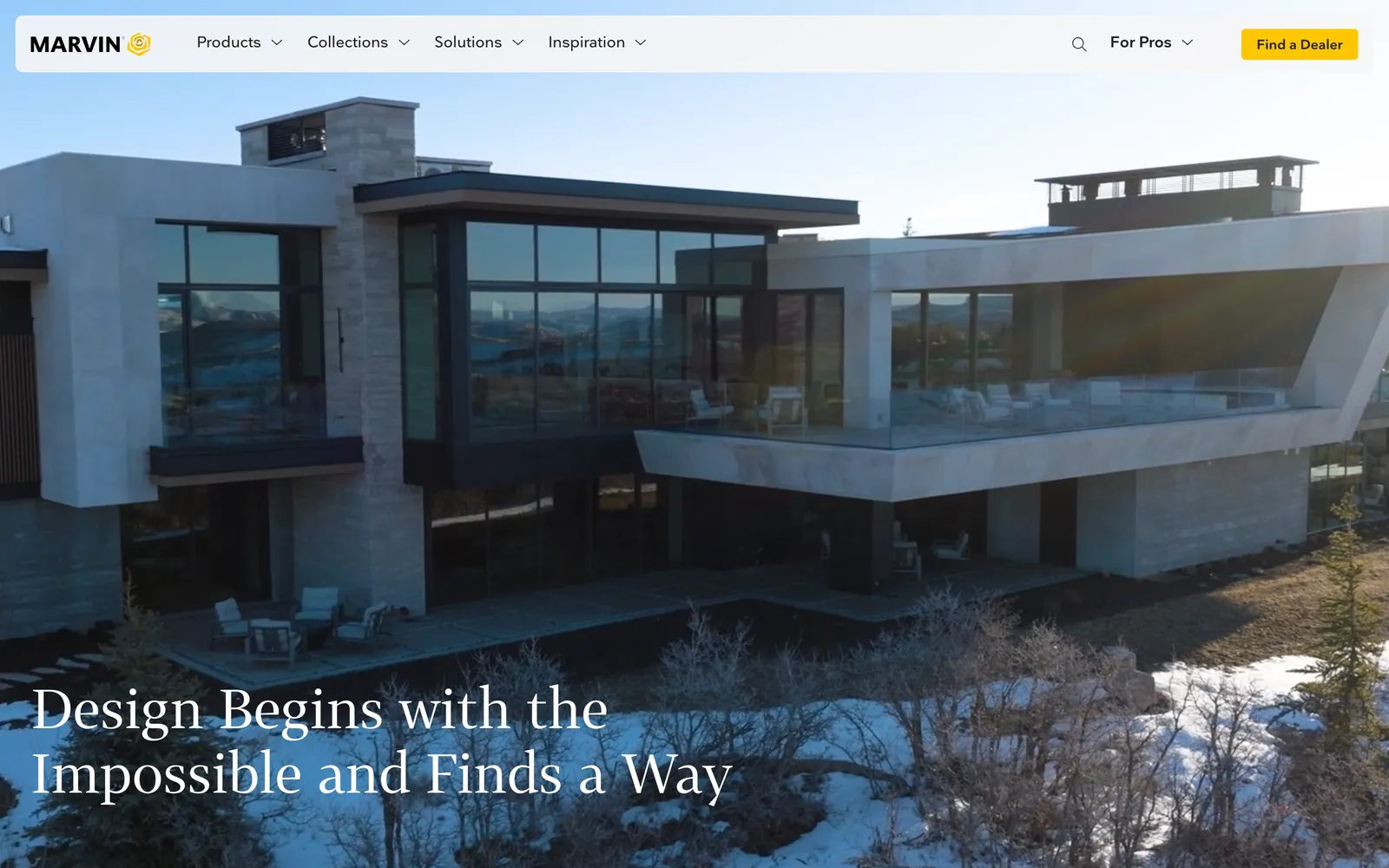
Marvin makes windows and doors, and its site is built on architectural photography: the homepage opens on full-screen video of finished houses. The Products menu works three ways, by window type, by door type and by material (aluminum, fiberglass or wood). Its five collections have a Compare Collections page for buyers deciding between them. Architects and builders get a For Pros area of their own. It holds energy performance data, installation instructions, CSI specifications and the CAD and BIM files they need to specify a window. Find a Dealer stays in the header.
What a mid-size manufacturer can copy. Give architects and engineers their own area with the drawings, specs and performance data they need to specify you, apart from the pages written for owners.
03. Anduril Industriesanduril.com
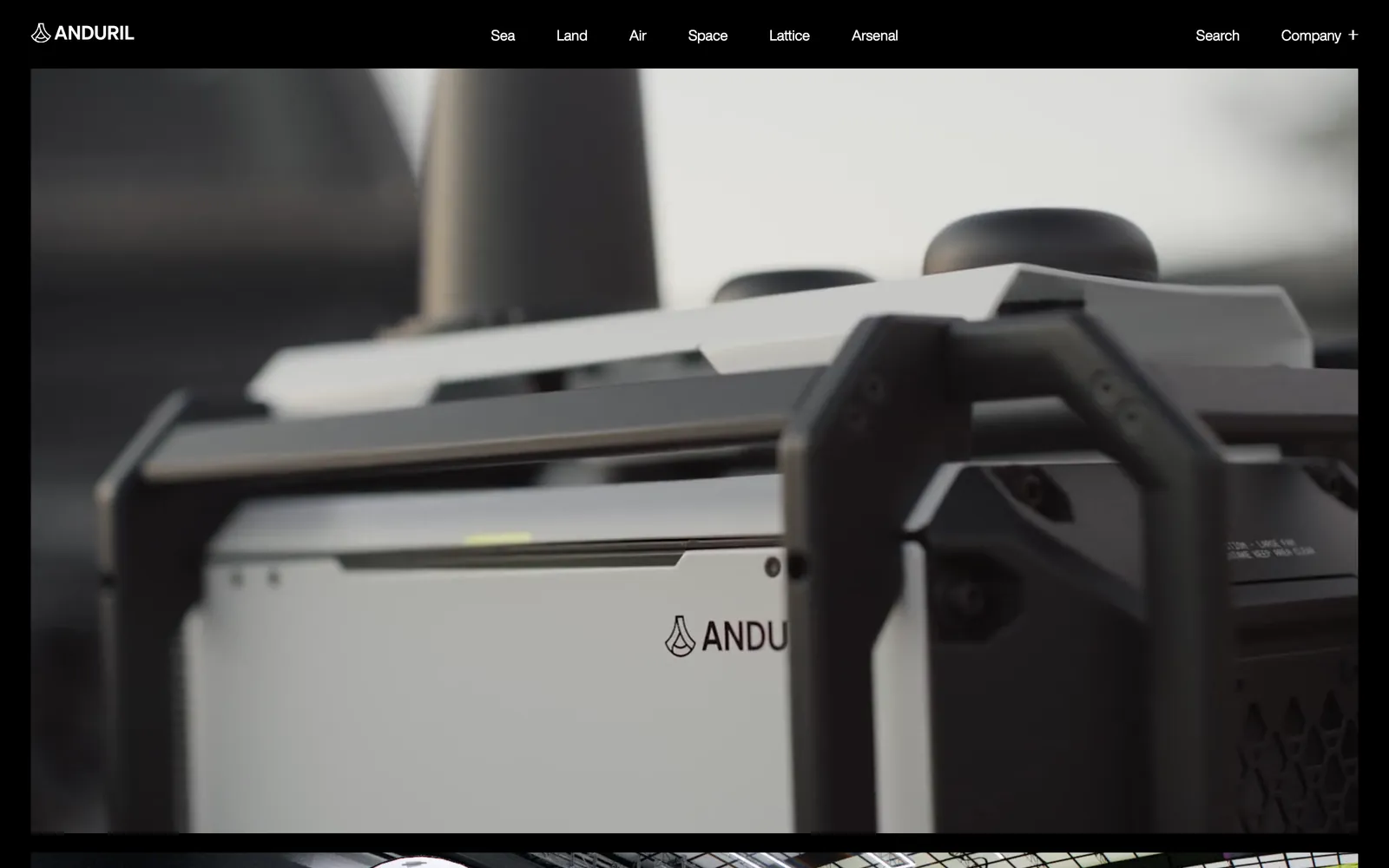
Anduril makes defense systems, and its site is the most distinctive on this list. The menu sorts products by where they work (sea, land, air and space), with Lattice, its software, and Arsenal, its manufacturing program, beside them. Below the hero each product gets a wide tile shot like a film still, with its name and a one-line promise. The product menu holds more than 20 products, and sorting them by domain is what keeps it usable.
What a mid-size manufacturer can copy. If you make many products for different settings, sort the menu by where each one is used. Buyers know their setting before they know your model names.
04. Vermeervermeer.com
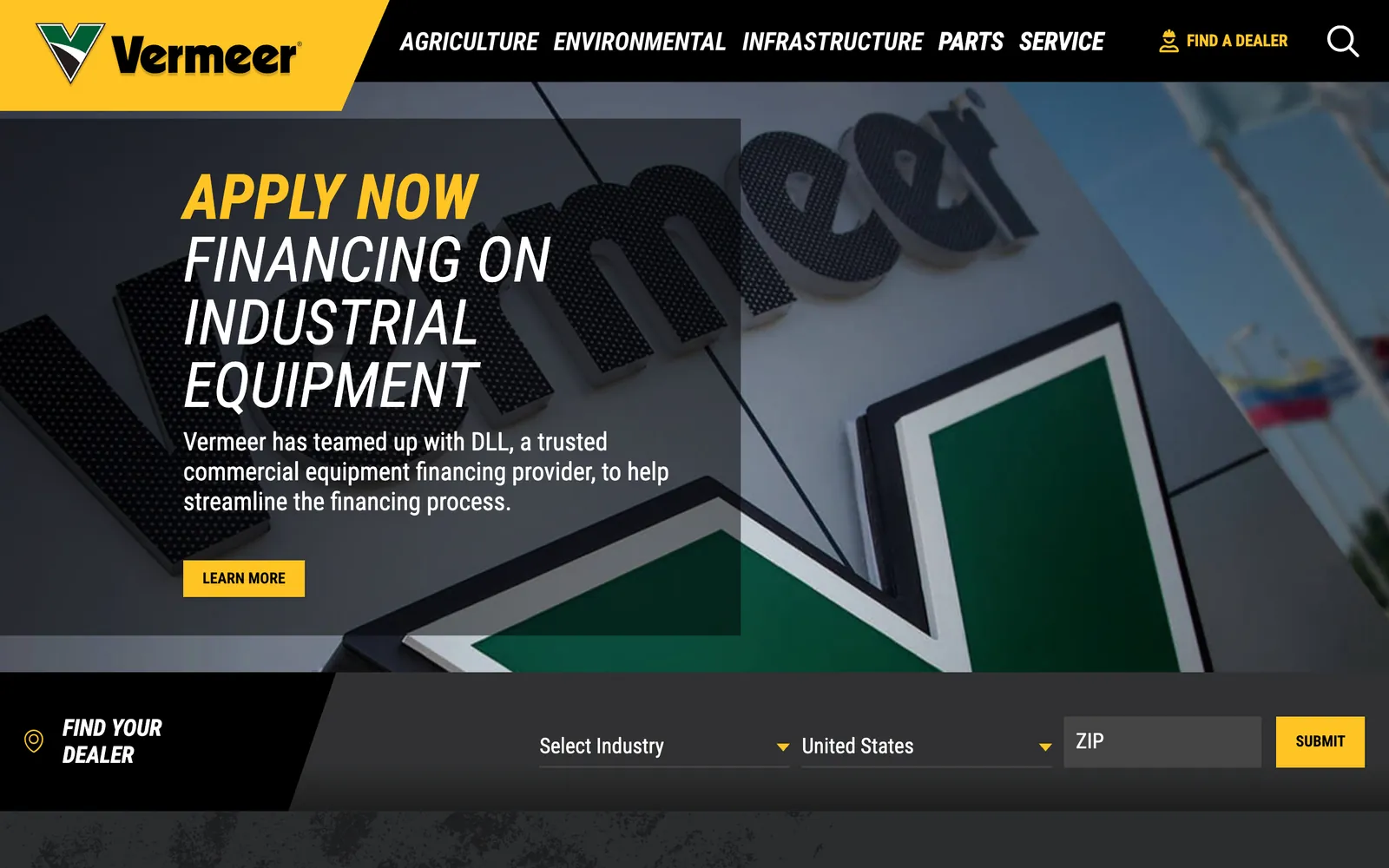
Vermeer, based in Pella, Iowa, makes agricultural and industrial equipment. Its North American homepage has a Browse by Industry grid of 12 industries, from agriculture and pipeline to tree care and vacuum excavation, which gets an operator to their machines in one click. A dealer finder sits under the hero and asks for the industry, the country, the state and a ZIP code. The yellow and black branding, set in bold italic type, runs through every section.
What a mid-size manufacturer can copy. Put a browse-by-industry grid and a dealer finder on the homepage. Between them they answer an equipment buyer's first two questions: do you make it for my work, and where do I buy it?
05. Skydioskydio.com
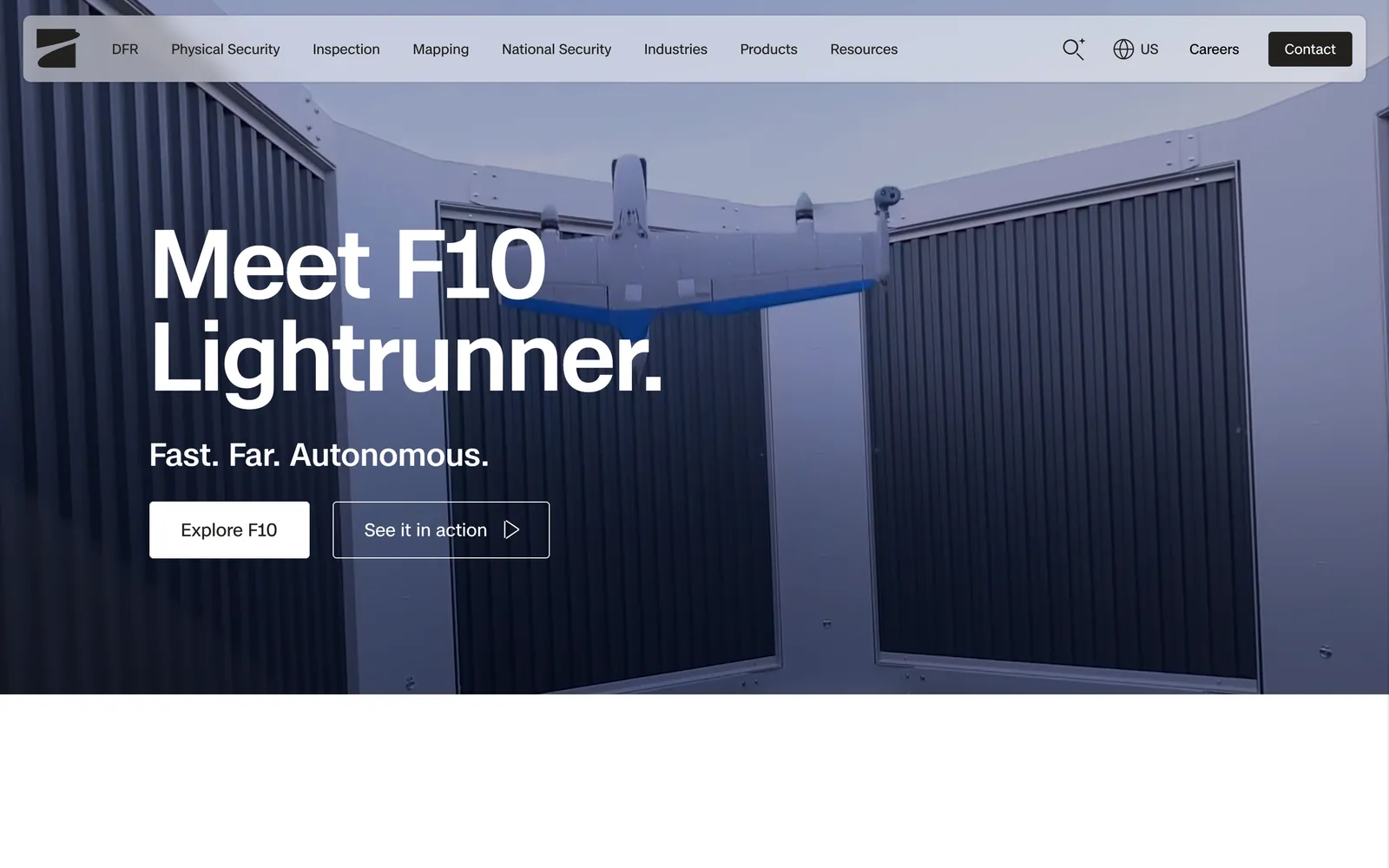
Skydio makes autonomous drones and the docks they fly from, for public safety, inspection and defense. The menu works by job (drone as first responder, physical security, inspection, mapping and national security) and by industry, so a police department and a utility each find their page in one click. A homepage section introduces the family: the F10 Lightrunner with its MegaDock, the X10 with its dock and the R10 for indoor work. Purchasing, resellers and contracts have their own pages under Resources, and the footer says the drones are designed, assembled and supported in the USA.
What a mid-size manufacturer can copy. Organize the menu by the job the buyer needs done. Then give purchasing teams a page on how to buy: resellers, contracts and who to call.
06. Crown Holdingscrowncork.com
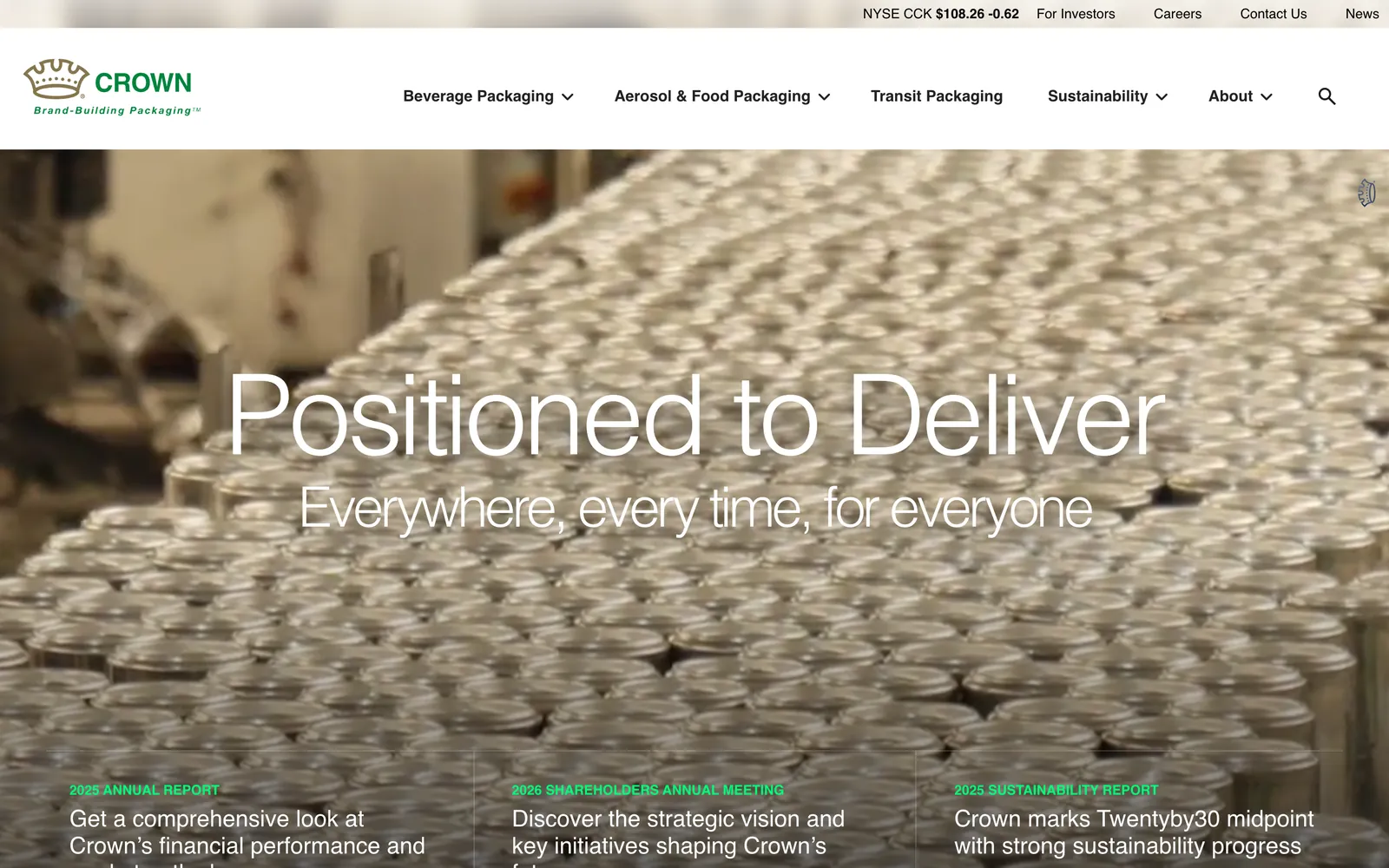
Crown makes metal packaging: beverage cans, food and aerosol cans, closures and transit packaging. It sells to brands by showing their cans. A carousel on the homepage runs customer stories, such as Coca-Cola's golden cans for the FIFA World Cup 2026 and the cans for Damm's 150th anniversary, and a band of drink types runs from craft beer and seltzer to coffee. The Beverage Packaging menu holds artwork templates and a reprographics studio, so a brand owner can start a can design from the menu. The one thing we'd change is the first screen, which leads with the annual report and the share price and so speaks to investors before buyers.
What a mid-size manufacturer can copy. Show your customers' finished products. A buyer can picture their own brand on your can, box or part from a real example more easily than from a list of capabilities.
07. Formlabsformlabs.com
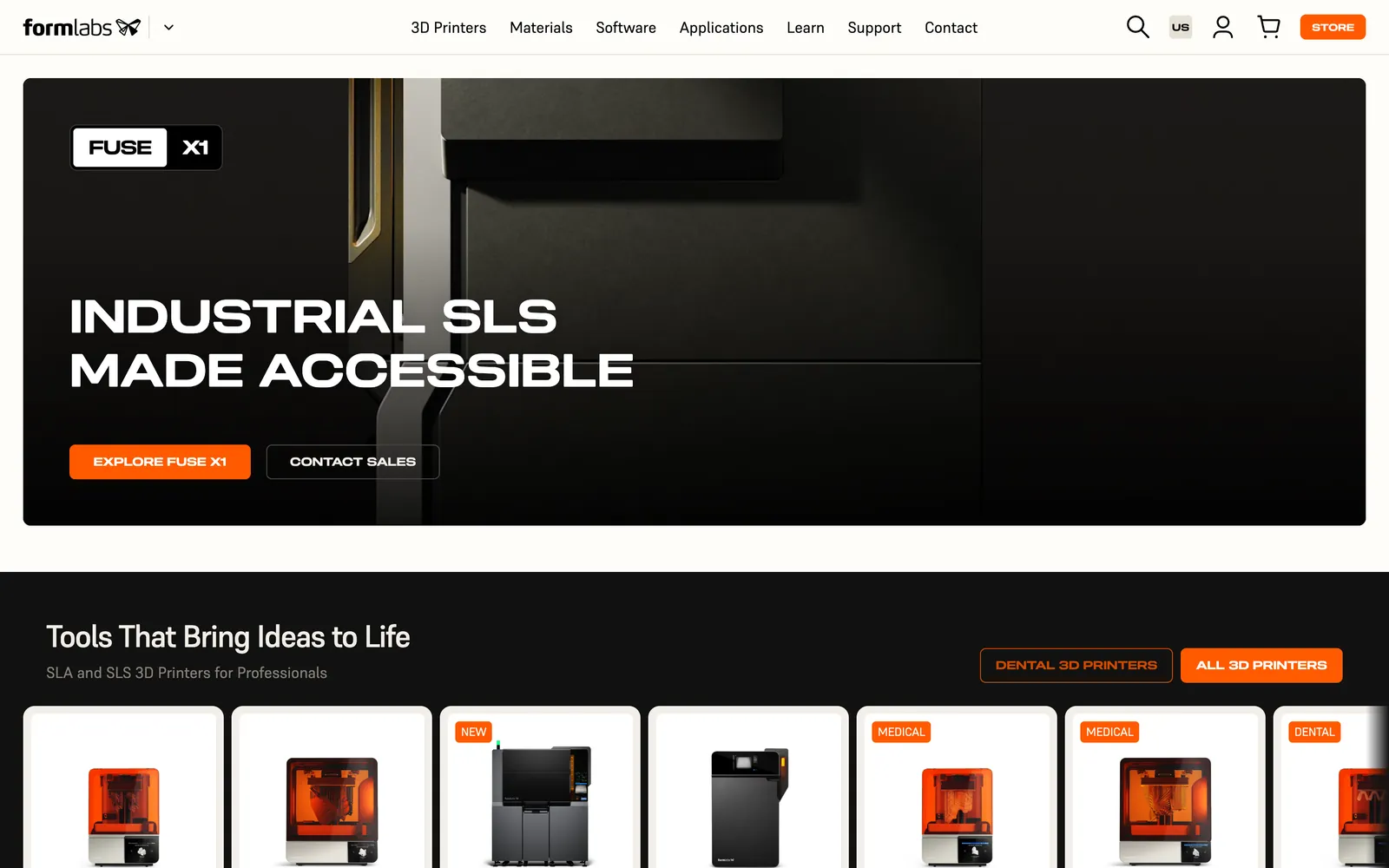
Formlabs makes 3D printers and the resins and powders they print with. The Materials menu has a Compare Materials page and sorts materials by printing technology (SLA or SLS) and by category, such as impact resistant, temperature resistant, medical and dental. On the homepage each printer card is tagged with its technology, and the medical and dental printers are tagged as such, so a dental lab finds its printers before reading a word. The Learn menu links data sheets and an ROI calculator, which is where an engineer goes next.
What a mid-size manufacturer can copy. Tag every product with the job and the industry it serves, and give engineers a compare page. They shortlist by property, so let them sort by it.
08. Redwood Materialsredwoodmaterials.com
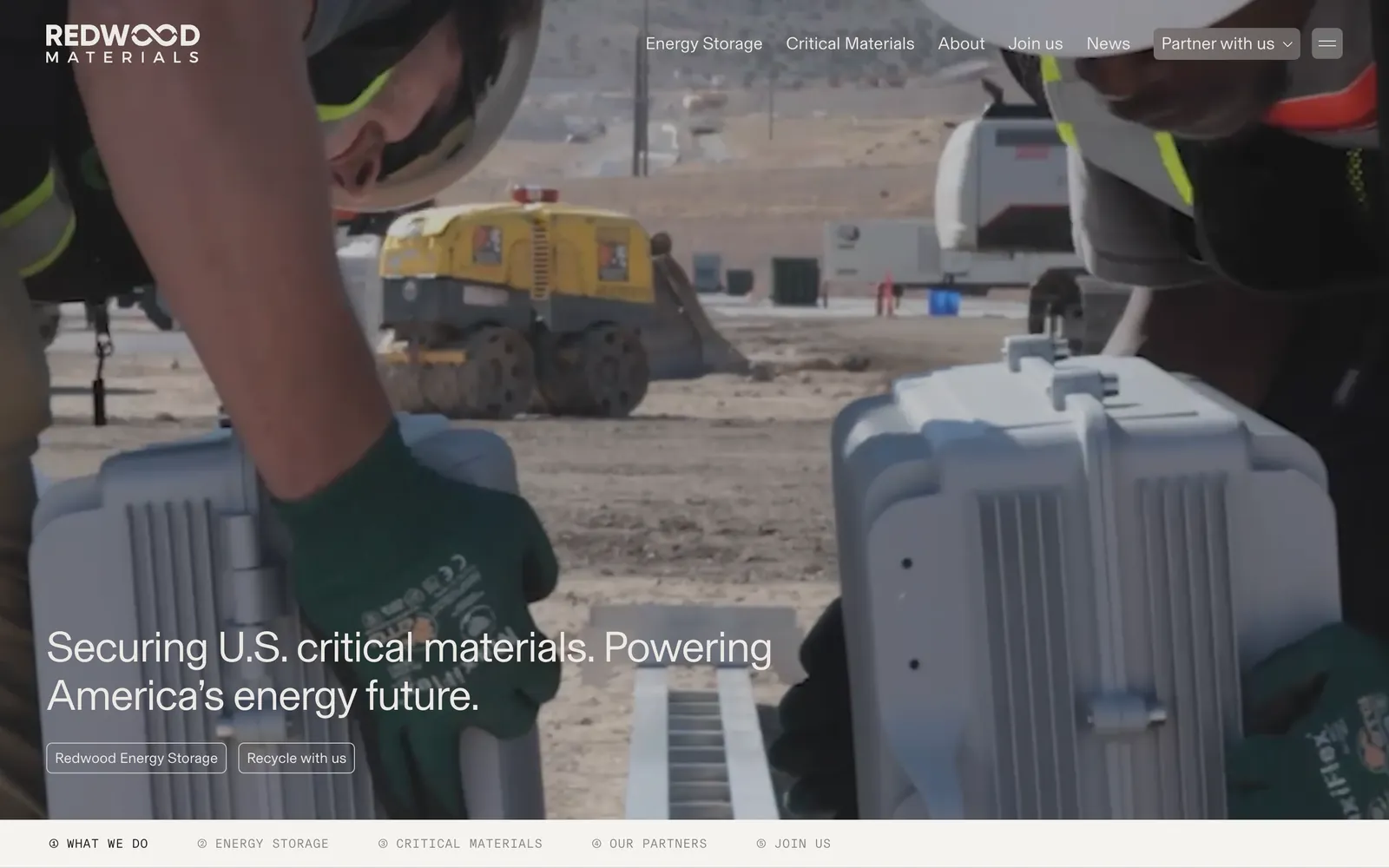
Redwood Materials recycles end-of-life batteries and builds energy storage systems from new and repurposed batteries. The homepage tells the business in five sections with an index bar (what we do, energy storage, critical materials, our partners and join us), so a reader always knows where they are. Each business ends in one plain button: Buy Storage or Recycle with us. The layout is calm, with small monospace labels and plenty of space, and the footer puts its ISO 45001 and ISO 14001 certifications next to its address in Sparks, Nevada.
What a mid-size manufacturer can copy. Give each line of business one button, in plain words. One clear next step is easier to act on than a row of six.
09. W. L. Gore & Associatesgore.com
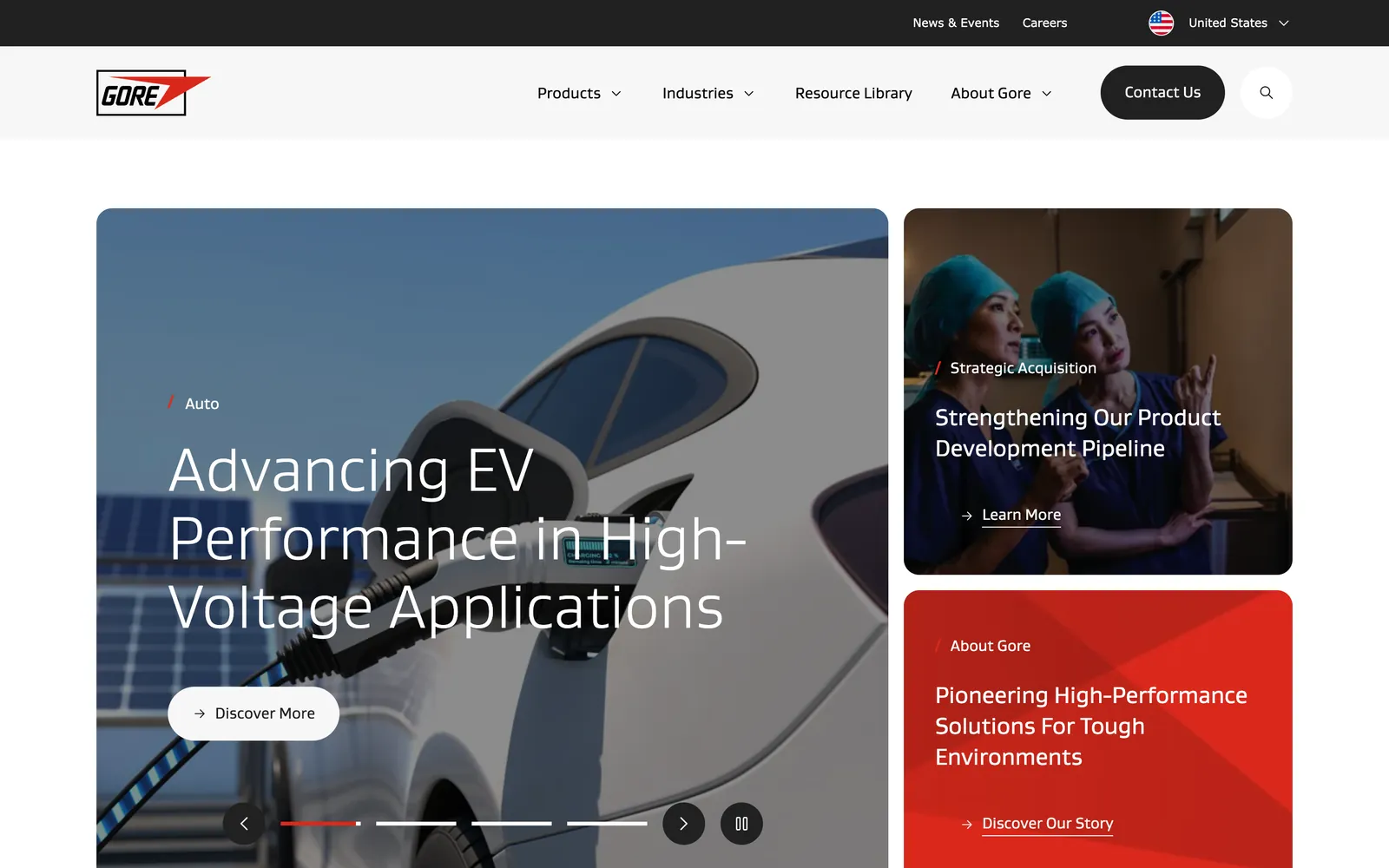
Gore makes advanced materials, from cables and filtration media to medical products, fabrics and vents. Its homepage has a three-way switch to browse by categories, by industries or by brands. An engineer after cable assemblies, a buyer from a car plant and a shopper who knows the GORE-TEX name each get their own way in. The category list runs from Cables & Assemblies to Proton Exchange Membrane (PEM) Technology.
What a mid-size manufacturer can copy. If you sell into several industries, let the visitor choose how to browse. A category view for engineers and an industry view for buyers can share one page.
10. Apexapexspace.com
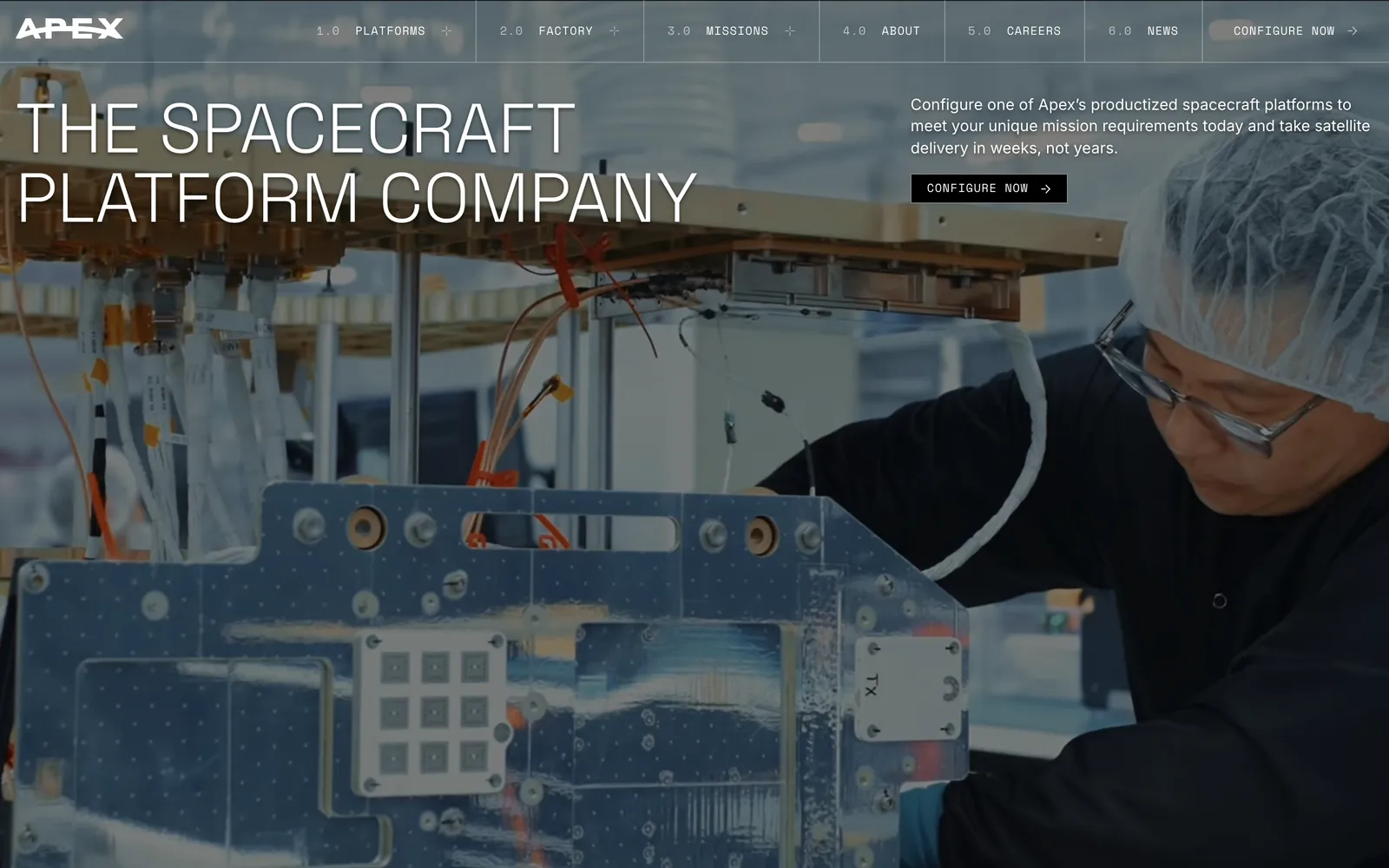
Apex builds satellite buses, the platform a satellite's payload rides on, at its Factory One in Los Angeles. The site sells each platform like a product with a spec sheet: a Configure Now button in the header, a Compare Platforms page and a card for each platform (Aries, Nova and Comet) with its payload capacity, its power and the orbits it serves. The opening video shows satellites being built on a factory floor, and the platforms section carries the line Proudly made in America. Capacity is on the page in numbers too. The homepage said in October 2026 that Factory One covers more than 130,000 square feet and can build more than 200 buses a year.
What a mid-size manufacturer can copy. Publish the numbers a buyer shortlists on, such as capacity, size and lead time. A compare page is the first step and a configurator is the next.
11. Milwaukee Toolmilwaukeetool.com
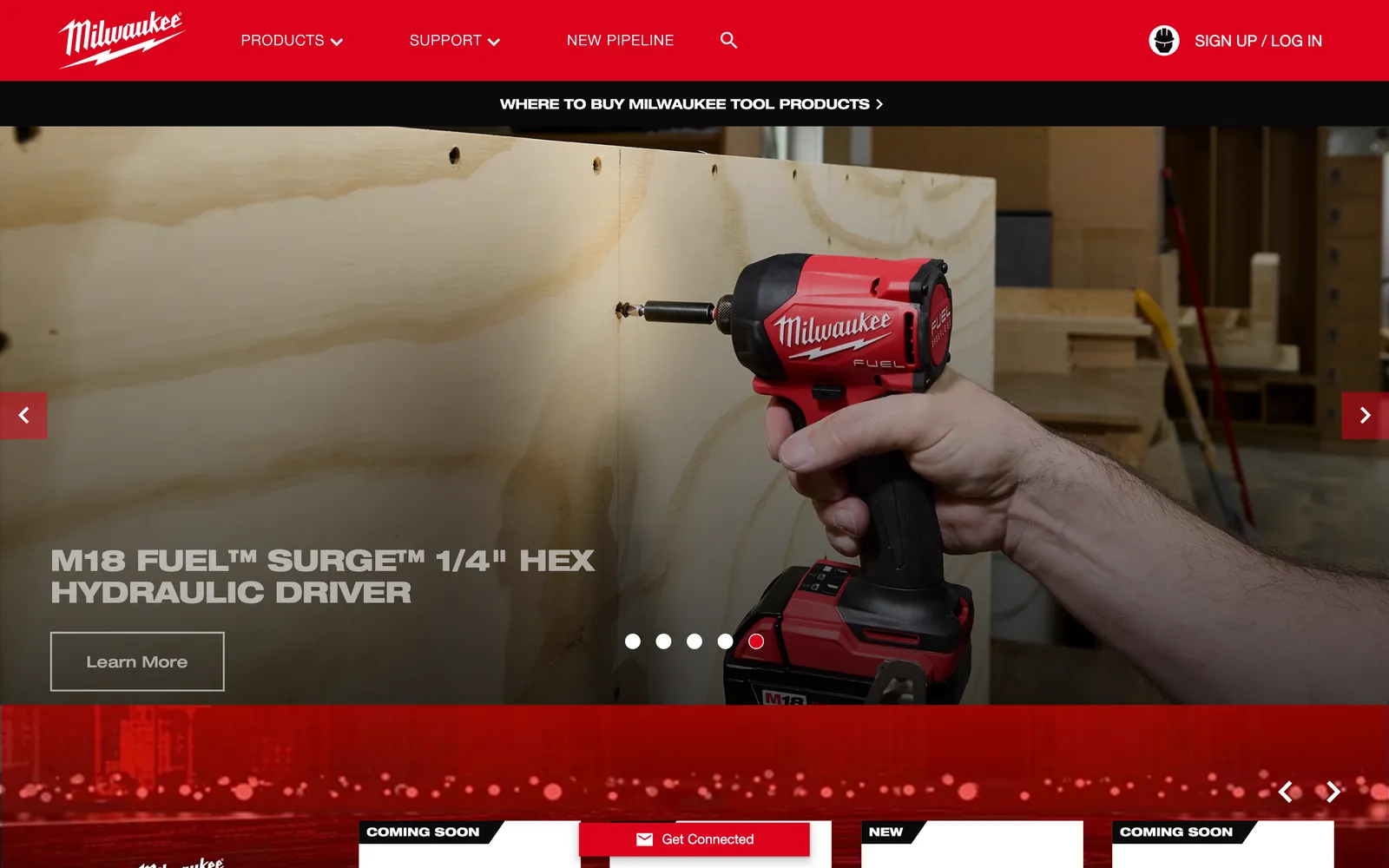
Milwaukee Tool makes power tools and jobsite storage, and its menu follows how trades buy, by battery system. The header splits the range into the cordless tool system, the cordless equipment system and the modular storage system (PACKOUT), so a contractor who already owns M12 or M18 batteries sees what fits them. A New Pipeline section previews tools tagged New or Coming Soon, and a Where to Buy bar sits under the header.
What a mid-size manufacturer can copy. If your products work together, sell the system. Group the catalog by the platform a customer has already bought into.
12. Nucornucor.com
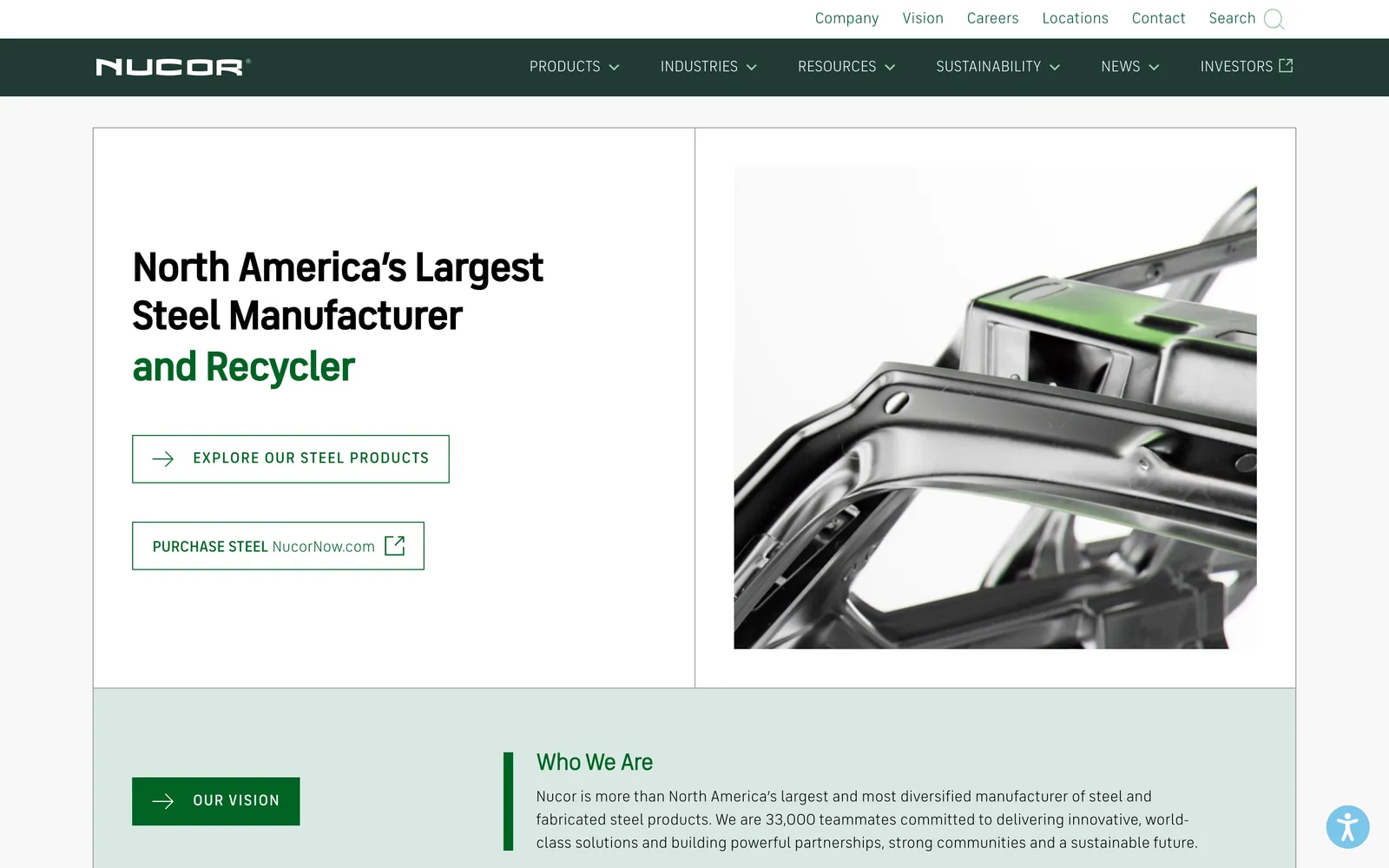
Nucor makes steel and steel products from a network of 27 steel mills, as its homepage said in October 2026. The first screen offers two paths side by side: explore the steel products, or purchase steel through NucorNow.com. Under that, Industries Served covers automotive, energy and construction, and the footer links certifications and safety data sheets. The hero picture changes between steel parts and the people who make them.
What a mid-size manufacturer can copy. Put the buying path next to the browsing path. A repeat buyer wants to order and a new buyer wants to look around, so give each a button on the first screen.
13. Protolabsprotolabs.com
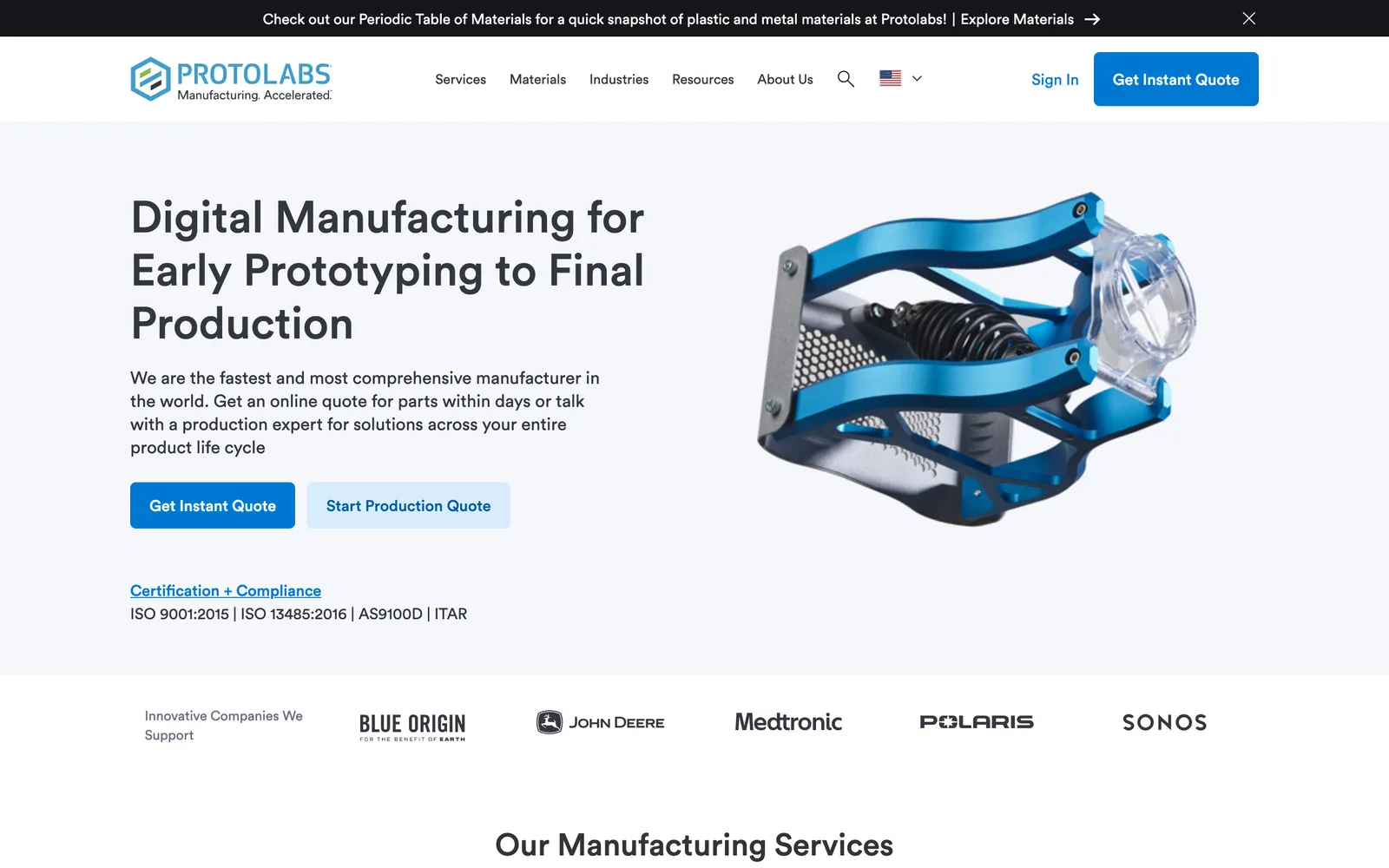
Protolabs makes custom parts on demand by injection molding, CNC machining, 3D printing and sheet metal fabrication. Get Instant Quote stays in the header. Upload a CAD file and, as the homepage put it in October 2026, design for manufacturability feedback and pricing come back within a few hours. Its certifications and compliance (ISO 9001:2015, ISO 13485:2016, AS9100D and ITAR) sit right under the hero, followed by customer logos. A materials tool sorts injection molding materials by type, flame rating and color. It is the plainest design on this list, and it earns its place on how quickly a buyer gets from a drawing to a price.
What a mid-size manufacturer can copy. Put your certifications under the hero and your quote form in the header. For a contract manufacturer, those two decide whether you get the RFQ.
14. JLGjlg.com
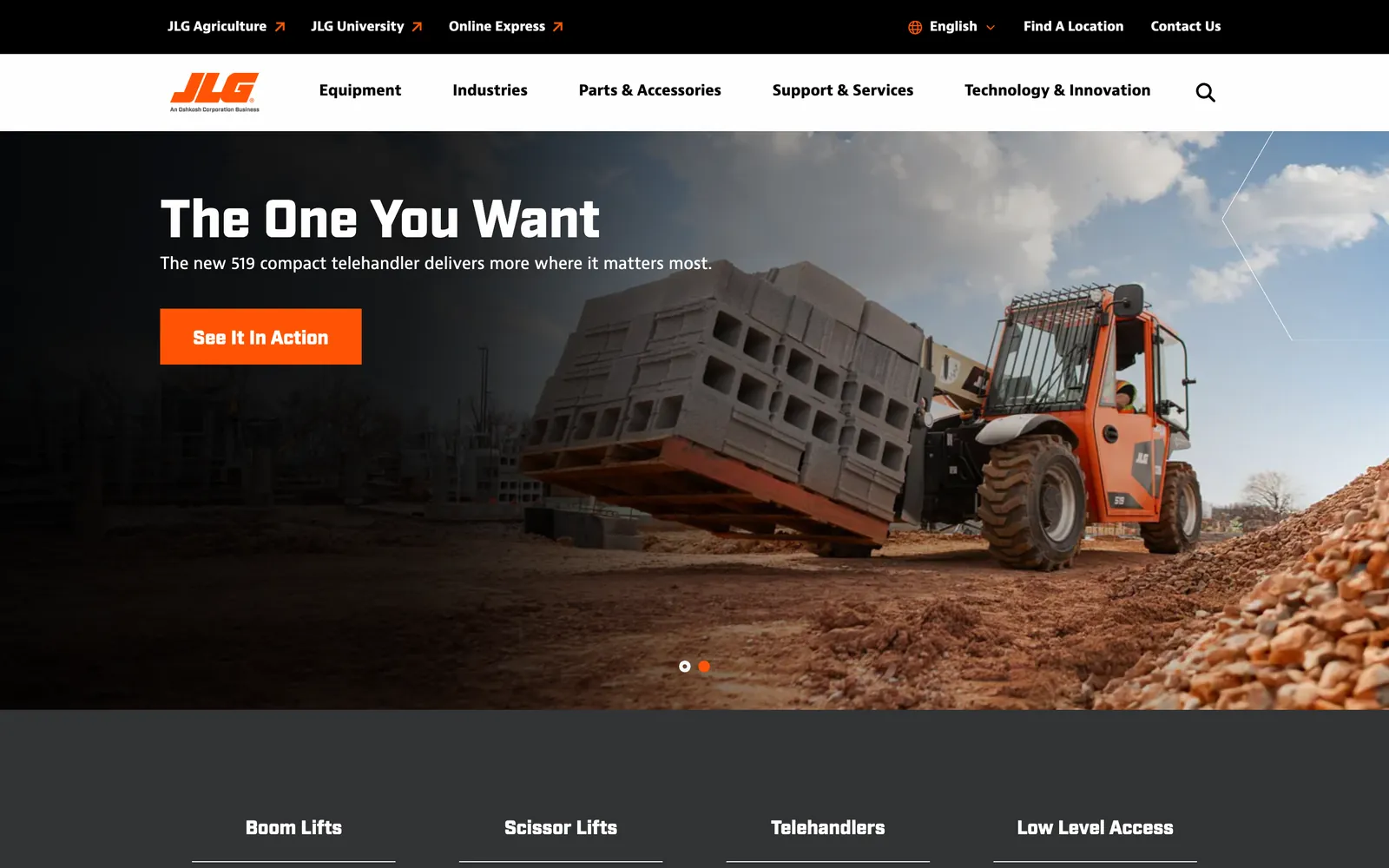
JLG makes boom lifts, scissor lifts and telehandlers. Its homepage has an Equipment Resources finder that pulls manuals and technical publications by resource type, machine type, model and publication type. A service location finder below it takes a city, state or ZIP code, or your current location. Machine types run across the page, from boom lifts to stock pickers, and the orange brand color is kept for buttons and highlights.
What a mid-size manufacturer can copy. Put the owner's tools on the homepage. People who already own your machines come back for manuals, parts and service, and each visit is a chance at the next sale.
15. Re:Build Manufacturingrebuildmanufacturing.com
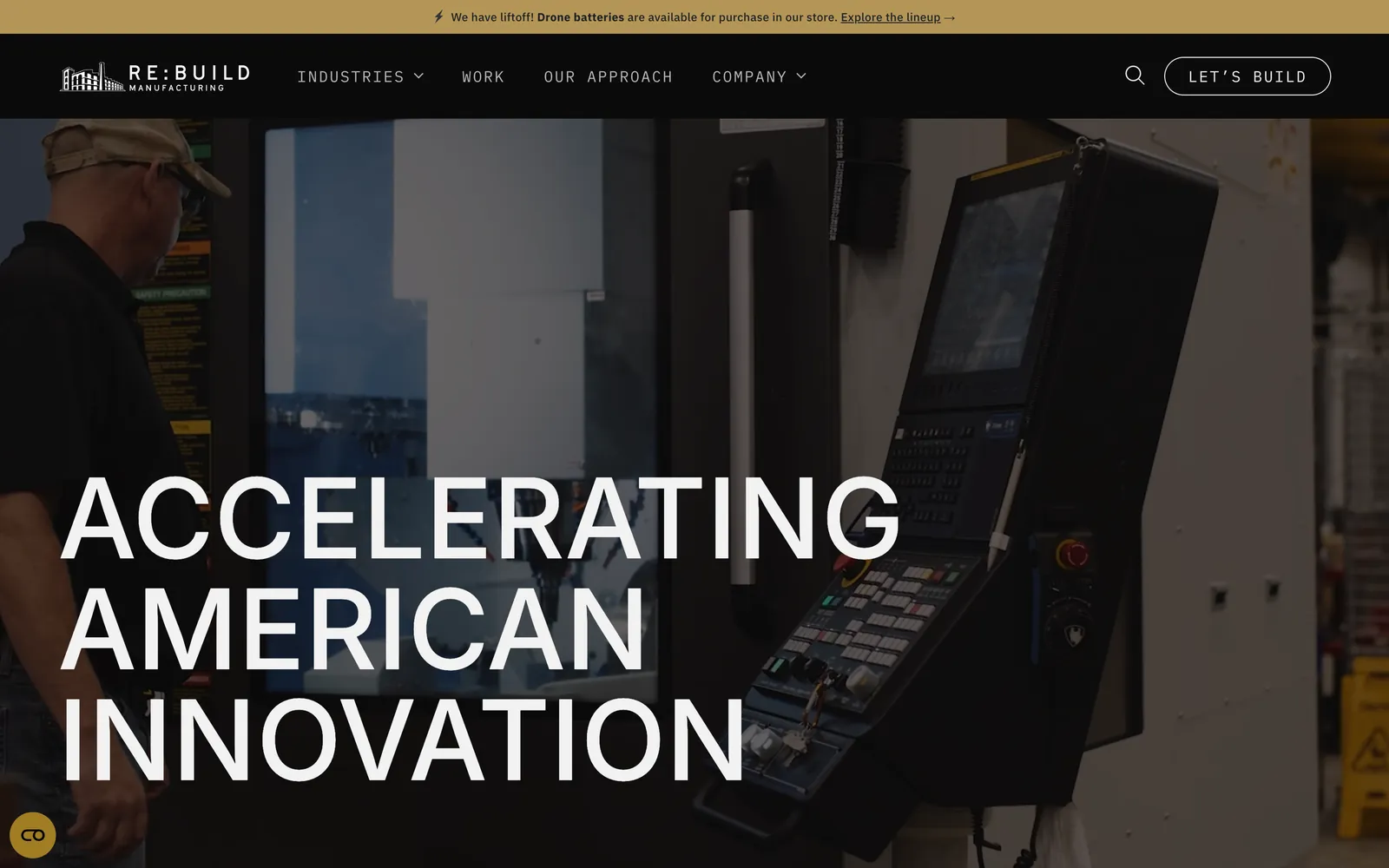
Re:Build Manufacturing is a contract engineering and manufacturing group that takes products from concept to full-rate production. The site has an industrial look, with monospace type and gold highlights, and an Industries menu of five markets: Aerospace & Defense, Electrification, Energy & Environment, Medical and Robotics & Automation. Scale is on the page in numbers. In October 2026 the homepage listed more than 400 engineers, more than 14 locations in the US, a million square feet of industrial space and more than 800 products launched. Featured projects follow, from a battery line to an electric vehicle.
What a mid-size manufacturer can copy. Put your scale in numbers on the homepage: engineers, sites, floor space and programs delivered. A buyer choosing a contract manufacturer wants to know you can handle the volume.
The 15 sites side by side.
One line per site: the buyer tool we would copy first and where it sits. We found each one on the live site in October 2026.
| Site | What it makes | The buyer tool to copy | Where it sits |
|---|---|---|---|
| GE Aerospace | Jet engines and aircraft systems | Engines sorted by the aircraft they fly on | Main menu |
| Marvin | Windows and doors | Products by window type, door type or material, plus a Compare Collections page | Main menu |
| Anduril Industries | Defense systems | Products sorted by where they work: sea, land, air and space | Main menu |
| Vermeer | Agricultural and industrial equipment | A grid of 12 industries and a dealer finder by industry, country, state and ZIP | Homepage, under the hero |
| Skydio | Drones and docks | A menu by job and by industry, with pages for purchasing, resellers and contracts | Main menu |
| Crown Holdings | Metal packaging | Artwork templates and a reprographics studio for brand owners | Beverage Packaging menu |
| Formlabs | 3D printers and materials | Compare Materials, with materials sorted by technology and category | Materials menu |
| Redwood Materials | Battery recycling and energy storage | One button per business: Buy Storage and Recycle with us | Homepage sections |
| W. L. Gore & Associates | Advanced materials | A switch to browse by categories, industries or brands | Homepage |
| Apex | Satellite buses | Configure Now and Compare Platforms, with payload capacity on each platform card | Header and homepage |
| Milwaukee Tool | Power tools and jobsite storage | Tools grouped by battery and storage system | Main menu |
| Nucor | Steel and steel products | Explore steel products, or buy steel through NucorNow.com | First screen |
| Protolabs | Custom parts on demand | Get Instant Quote: upload a CAD file for design feedback and pricing | Header |
| JLG | Boom lifts, scissor lifts and telehandlers | A manuals finder by resource, machine type, model and publication type | Homepage |
| Re:Build Manufacturing | Contract engineering and manufacturing | An Industries menu and its scale in numbers | Main menu and homepage |
What the best industrial websites have in common.
01. The menu follows the buyer. GE sorts engines by aircraft, Anduril sorts products by sea, land, air and space, Skydio sorts by the job and Milwaukee by battery system. None of them sorts by its own org chart.
02. The products and plants are real. Factory floors at Apex and Re:Build, customers' cans at Crown and test aircraft at GE. The pictures show the companies' own work.
03. The next step is one button. Find a Dealer at Marvin, Get Instant Quote at Protolabs, Configure Now at Apex and Buy Storage at Redwood. Each sits in the header or on the first screen.
04. The proof is checkable. Protolabs lists its certifications under the hero and Redwood its ISO certifications in the footer. Skydio and Apex say where their products are made, and Apex and Re:Build put their capacity in numbers.
05. Specifiers get their own door. Marvin's For Pros area, JLG's manuals finder and Formlabs' data sheets serve the people who specify, install and maintain the product, apart from the pages that sell it.
What's mostly absent.
Prices, for the most part. Formlabs runs a store and Nucor sends steel buyers to an online ordering site, but most of the 15 sell through dealers or quotes. Spec tables on the homepage are rare too. Apex is one of the few that puts product specs on its homepage, and on most of these sites the numbers sit a click or two deeper. Few homepages give lead times, and few show case studies with results in numbers. Most show the product well and say less about what it did for a customer.
What mid-size manufacturers can take from this.
You don't need GE Aerospace's budget for most of this. Three changes do the most: a menu sorted the way your buyers think, a next step on the first screen (a quote form, a dealer finder or a configurator) and real photos of your products and your plant. Add a quality page with your certifications and an area for engineers with specs and CAD files, and you have most of what puts these sites ahead.
On our published prices, a site like that is usually our Foundation Level, from $9,500 in 2 to 3 weeks, or our Growth Platform, from $19,500 in 3 to 4 weeks. A filterable product catalog, a configurator or a customer portal makes it a custom build, our Authority System, from $30,000. Every package is on our pricing page.
If your company is planning a redesign.
The most common mistake we see is benchmarking against your direct competitors. Many of them run sites as old as yours, so matching them gets you a slightly newer old site. The 15 companies above are the better comparison.
Start with the checks an engineer makes, in the order they make them: can I find the product, does it meet my spec, are you certified and can I get a quote? They are all in our checklist for manufacturer websites.
If your site is slow, hard to update or running on old plugins, our website rebuilds move it to a fast modern setup and keep the pages that already bring in work. If the site is sound but engineers and buyers don't find you, our SEO Growth Program adds product, application and industry pages every month. Or book a call and we'll go through your site with you.
More on how we approach the category: manufacturing website design. The same kind of list for other sectors: the best engineering firm websites, the best energy and petrochemical websites and the best construction company websites.
What does a website like this cost?
The sites above were built to win work, and their budgets reflect that. What a company website costs in 2026 breaks down design, build, copy and ongoing care, with our own published prices.