Insights
Payload, WordPress, Sanity or Contentful: which suits a business website?
How to buy itBy Whitelam Media7 min read
All insightsThe content system is the part of your website your team uses every week. Four names come up most: WordPress, Sanity, Contentful and Payload. We build with Payload. Here's why, with current prices, and when one of the others is the better choice.
The content system is the part of your website your team uses every week. It decides how easy it is to add a project, fix a typo or publish in another language, and some charge for every person who logs in.
Four names come up most when a business plans a new site: WordPress, Sanity, Contentful and Payload. We build with Payload, so we're not neutral. This guide says why we chose it, and when one of the others is the better choice. Prices are from each vendor's own page, checked in October 2026. They change, so check again before you decide.
If you're new to the idea of a content system kept apart from the design, start with what a headless CMS is.
The short version.
| Payload | WordPress | Sanity | Contentful | |
|---|---|---|---|---|
| What it is | Open-source content system that runs inside your website's own code | Open-source website platform with themes and plugins | Hosted content platform | Hosted content platform |
| Where your content lives | Your own database | Your own database | Sanity's cloud | Contentful's cloud |
| License fee | None | None | Free up to 20 seats, then $15 per seat a month | Free plan, then Lite at €300 a month |
| Best for | Business sites where the team edits often and wants one system | Sites that already work on WordPress | Teams publishing to many channels | Large organizations already using it |
Payload: content inside your own website.
Payload installs inside a Next.js website, so the site and the editor are one codebase. Your content sits in your own database. It officially supports Postgres, MongoDB and SQLite. We use Postgres on Neon.
What your team gets:
- an editor shaped around what you publish, such as projects, services, people and news;
- live preview, with the real page updating as you type;
- versions, so an earlier version of any page can be restored;
- translations stored field by field, so a page's English and Spanish sit in the same entry;
- access rules down to a single field, so a recruiter can edit job openings and nothing else.
Payload is open source under the MIT license, with no fee per editor. The Payload team joined Figma in June 2025, and Figma says Payload will remain open source. Version 3 has been stable since November 2024.
The trade-offs are real. The editor is set up in code, so changing its shape needs a developer. There's no store of plugins to add features with a click. And Payload's own hosting service has paused new projects, so someone has to host the site and keep it updated. On the sites we build, that's us.
WordPress: the familiar choice.
WordPress runs 40.2% of all websites. Most marketing teams have used it, and there's a plugin for almost anything. That's its strength and its risk: most security flaws are in plugins, as our look at whether your WordPress site is a security risk explains.
If your WordPress site is fast, secure and easy for your team to update, keep it. If it's slow, behind on updates or held together by page builders, that's when a move is worth costing. Our guide on WordPress or a modern stack goes through the decision.
Sanity: a hosted content platform.
Sanity keeps your content in its own cloud, and your website fetches it from there. The Free plan covers up to 20 user seats. The Growth plan costs $15 per seat a month, for up to 50 seats, with more roles and private datasets. Larger teams move to custom Enterprise pricing.
Sanity suits teams that publish the same content to several places, such as a website, an app and a newsletter, and want one hub for all of it. The costs to watch are seats as the team grows and usage on busy sites.
Contentful: built for large organizations.
Contentful is also hosted. Its Free plan includes 10 users, 2 languages and 100,000 API calls a month. The first paid plan, Lite, was listed at €300 a month on the page we checked, for 20 users, 3 languages and 1 million API calls. Bigger needs go to custom Enterprise pricing.
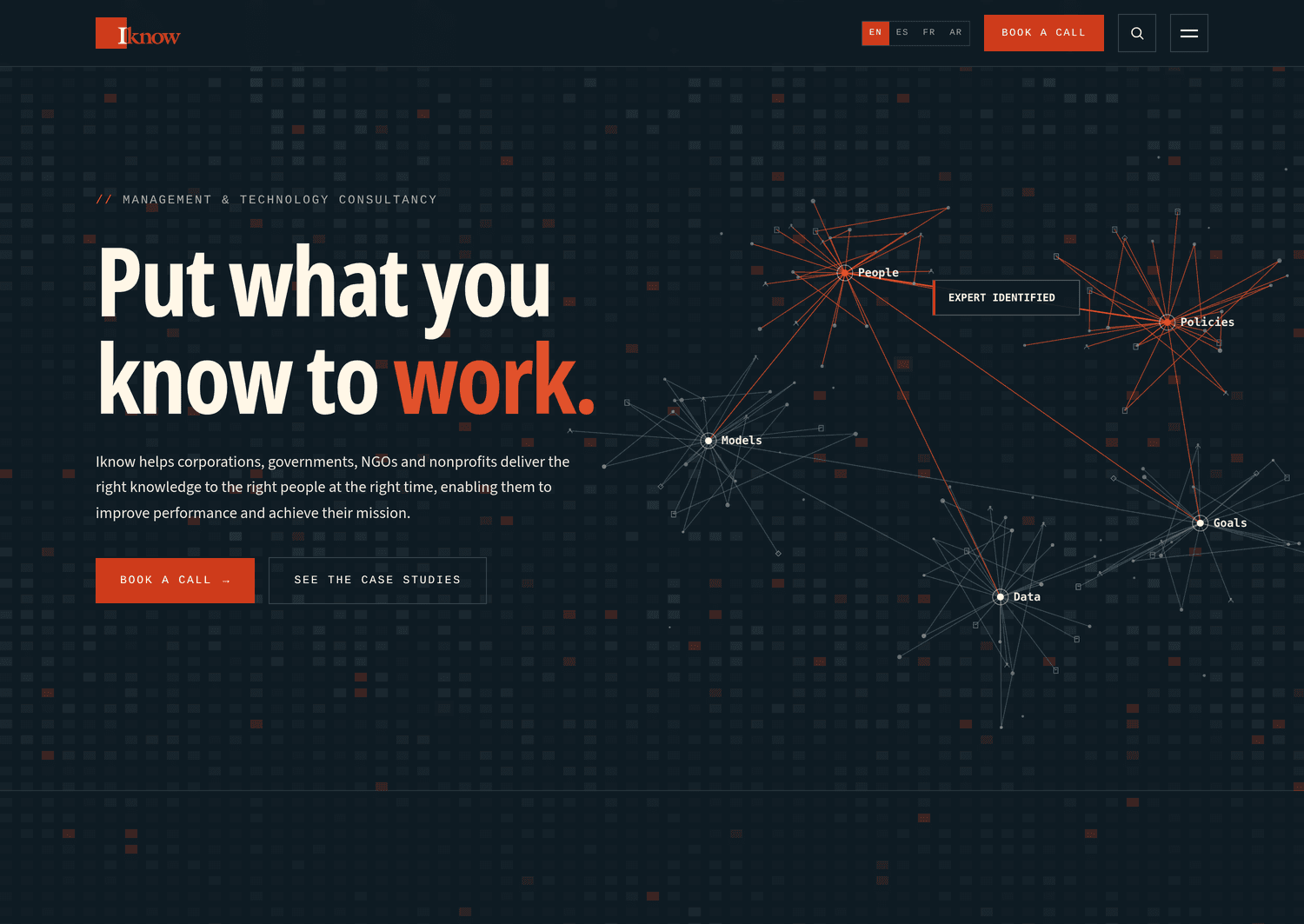
Count your languages before you choose. A site in four languages, like the one we built for Iknow, needs more than Lite includes. Contentful fits large organizations that already run it across several brands or sites.
What about Strapi?
Strapi is another open-source option, with its community edition under the MIT license. Like Payload, it can run on your own hosting. Its hosted service, Strapi Cloud, ended its free plan on July 1, 2026. The cheapest plan is now $35 a month.
Which one we'd pick for you.
For most business websites we build, Payload. One codebase to run, your content in your own database and no fee per editor. It handles several languages well, and editors see exactly what they'll publish. Iknow's team edits their site in English, Spanish, French and Arabic on Payload.
We'd tell you to keep WordPress if it's working. We'd point you to Sanity or Contentful if you publish to many channels or your organization already pays for one of them.
See how we build on Next.js and Payload, including what each part of the stack does for you.